
Nobody warns you about the sunburn until it’s too late. You spend the whole ride home watching your shoulders turn the color of a stop sign, wondering how it happened when you applied sunscreen that morning. Once. At 9am. Before six hours of water-reflected UV hit you from every angle.
Boat days are genuinely some of the best days. But they have a way of punishing poor preparation that a beach trip or a hike just doesn’t. The water amplifies everything – the sun, the cold, the wind, the effect of one too many drinks – and you’re stuck out there with whatever you brought. No corner store. No running back to the car. Just you and your bag.
So here’s what to actually pack.
Sunscreen
Here’s the thing about being on a boat – the sun hits you from above and bounces back at you off the water. Research shows water can reflect up to 25% of UV rays (Skin Cancer Foundation), which means you’re essentially being cooked from two directions at once. The result is a burn that sneaks up on you, because you feel fine until you really, really don’t.
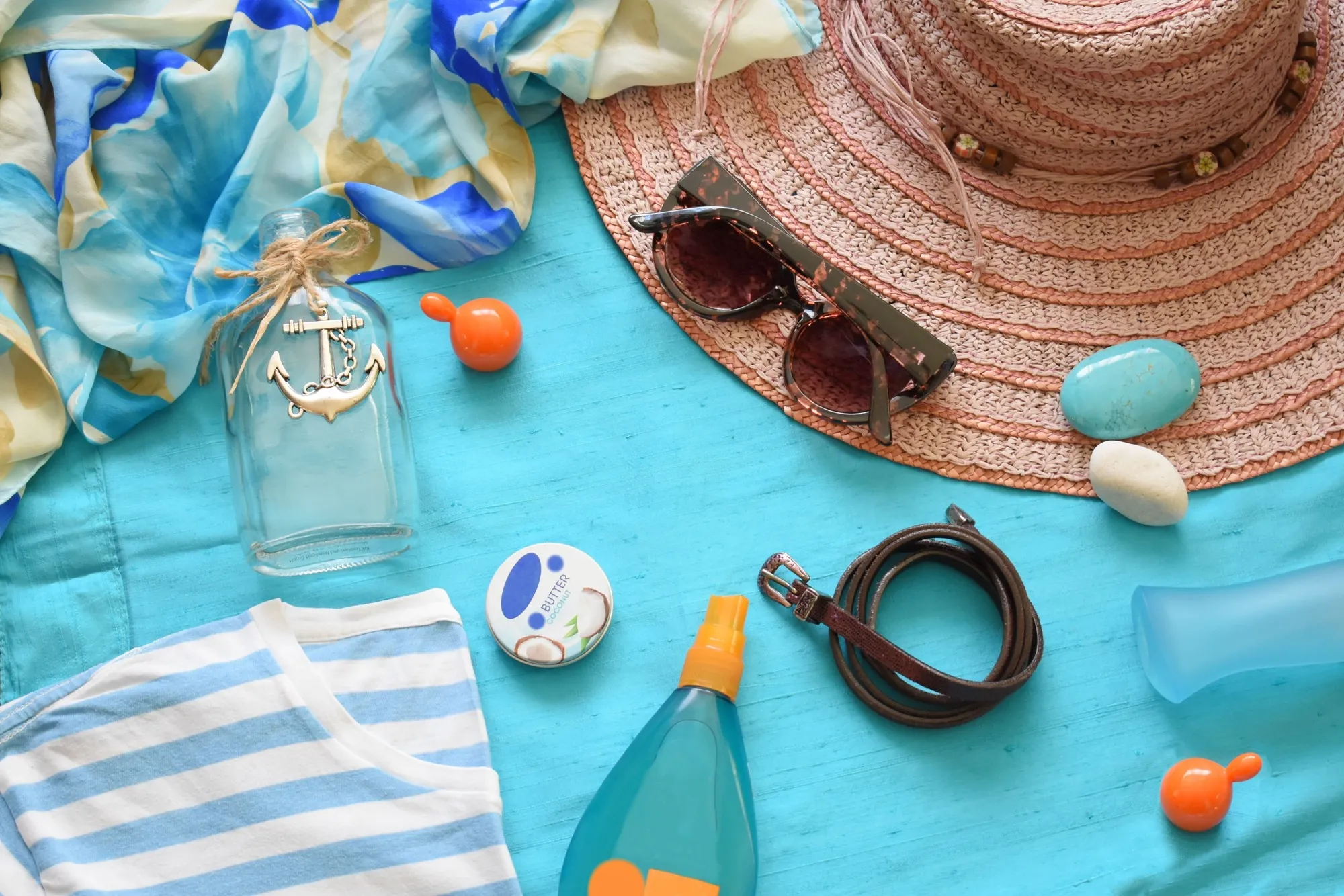
Pack SPF 50+. Bring a bottle that feels like too much, because it probably isn’t. Set a timer and reapply every two hours, and every time you get out of the water. If you’re swimming, go for a reef-safe mineral formula – better for the ocean, and it doesn’t leave that slick on the water that makes you feel vaguely guilty.
Beyond sunscreen: a wide-brimmed hat with a chin strap. Not a baseball cap. Baseball caps blow off within the first ten minutes, they become someone else’s problem, and you’re left squinting for the rest of the day. Also sunglasses – polarized ones, so the glare off the water doesn’t give you a headache by noon. Toss in some aloe vera for the ride home, just in case.
What to Wear
Cotton is comfortable on land and miserable on a boat. It soaks up water, takes an eternity to dry, and turns cold the second any wind hits it. You will be wearing a damp, cold shirt for three hours and it will not be fun.
Quick-dry fabrics are what you want – anything designed for swimming, hiking, or general outdoor use. A swimsuit underneath a lightweight cover-up is the classic formula. Bring a layer too. Even on warm, sunny days, an hour of wind spray on open water will have you rummaging for a hoodie. Don’t be the person who didn’t bring a layer.
For shoes: flip-flops are fine on the dock. On the actual boat, they’re a liability. They slip on wet surfaces, they don’t grip, and they have a tendency to fly overboard at inconvenient moments. Water shoes or soft-soled sneakers with real grip are better. Most boat owners will also quietly appreciate not having black marks all over their deck.
Pack a Dry Bag. No, Seriously.
First-timers never bring one. People who’ve been on boats more than twice swear by them. A waterproof dry bag is where your phone, wallet, and keys live for the day – sealed away from spray, splashes, and the occasional rogue wave.
Your phone is probably rated waterproof to some degree. “Waterproof to 1 meter for 30 minutes” and “dropped overboard into the lake” is not the same situation. Use a dry bag. Close it properly (the roll-top matters).
Throw a power bank in there too. Boats don’t have charging ports. A full day on the water – music, photos, GPS, general distraction – will drain your battery faster than you expect.
Food, Water, and the Cooler That’s Worth Its Weight
Dehydration sneaks up on you on the water. The sun, the salt air, the physical activity – they all work against you, and thirst isn’t always a reliable signal that something’s wrong. Bring more water than you think you need. Insulated bottles or a proper water jug keep things cold. Electrolyte drinks are worth adding for longer days.
For food, the rules are simple: easy, portable, nothing that needs refrigeration unless you have a cooler, and nothing in glass. Wraps, sandwiches, fruit, trail mix, granola bars – all good. A bag of crisps. Whatever doesn’t require cutlery or a flat surface to eat. If you have a cooler, use it for food only and a separate one for drinks; the food cooler stays colder when it’s not being opened every ten minutes.
The Small Things That Make a Big Difference
Seasickness medication. Even if you’ve never been seasick in your life, choppy water has a way of changing that. The critical thing most people get wrong: you need to take it before you get on the boat, not once you’re already feeling off. Over-the-counter options like Dramamine work by blocking signals in your brain before the motion confusion starts – not after. Ginger chews are a gentler alternative if you’d rather avoid medication.
A change of clothes in a dry bag. You will get wet at some point. Having dry clothes for the ride home is one of those small things that feels absurdly satisfying.
A microfiber towel. Takes up almost no room, dries in minutes, and earns its place every single time.
A small first aid kit. Bandages, antiseptic wipes, pain reliever, and any personal medication you take. Cuts happen. Headaches happen. The nearest pharmacy is back on land.
Leave This Stuff Behind
Hard-sided bags and suitcases – they’re awkward to stow and can scratch up the deck. A soft duffel or a backpack is all you need.
Anything genuinely irreplaceable. Nice watches, expensive jewelry, the sunglasses you’d be devastated to lose. Either leave them home or make peace with the risk.
And honestly, the mindset that you need to be reachable all day. The water is right there. The people you’re with are right there. Most of what’s on your phone can wait until you’re back on dry land.
A good boat day doesn’t require much. It just requires you to actually show up for it.